“The One” and Investigators’ Fixation on Suspects
I'll Be Gone in the DarkThe One and Investigators’ Fixation on Suspects concerns the pull of a single, seemingly complete answer in a long-running criminal investigation. The book compares suspect fixation to blind love: attention contracts around one face, while ordinary facts acquire meanings that confirm the story investigators have begun to build. The pattern is not simply a series of mistaken hunches. It is a conflict between the legitimate need to connect scattered evidence and the danger that a compelling candidate will make ambiguity look like proof.
How a Suspect Becomes the One
The temptation begins with a real investigative problem. The East Area Rapist repeatedly appeared to know where people lived, when they were home, and how their houses were laid out. Reports described prowling, unlawful entries in nearby homes, missing small belongings, and a rise in hang-up calls within a few blocks of an attack. The repeated details suggested reconnaissance and planning, but they did not by themselves identify who was responsible. Investigators had to reason from patterns whose maker remained unknown.
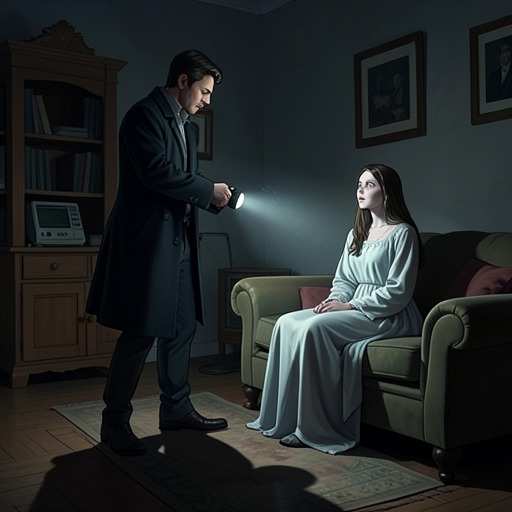
That uncertainty could make a single candidate feel like a solution. In the account’s description of fixation, an investigator collects more and more details about a suspect, even apparently trivial ones, and reads them through the hypothesis already in mind. Information ceases to be merely information: it becomes material for a private narrative. The danger is confirmation bias, including the projection of sinister meaning onto an ordinary image or gesture. A candidate can begin to seem inevitable before the evidence has established that he is the offender.
The difficulty was sharpened by the offender’s apparent knowledge of victims’ lives. Kathy and David told investigators that the East Area Rapist had not opened or approached their three-year-old son’s bedroom. Other victims with young children noticed similar restraint. How the attacker learned about households and home layouts remained a question for speculation. Such unexplained precision made the prospect of identifying a singular, all-explaining suspect especially powerful, but the unresolved method of the crimes did not itself validate any particular theory.
Ron Greer and the Force of a Hunch
Sacramento Sheriff’s Detective Ken Clark and his partner became convinced that Ron Greer might be the One. A thirty-year-old supplemental report had brought Greer to their attention. He had been stopped at 4:27 a.m. on April 15, 1977, driving south on Sunrise Boulevard in a yellow two-door Datsun, minutes after a nearby East Area Rapist assault had been reported. He told police he was on his way to work as a janitor at a rice mill and was described as quiet and cooperative.
The officers searched the trunk and, with Greer’s consent, searched his residence. He said that after his mother’s death he had been living on his sister’s property, in a run-down storage trailer buried among bushes on a steep hillside in Fair Oaks. The trailer was no more than eight feet long and too short to stand up in. Greer also had a solid work alibi for an earlier assault, yet the investigators who encountered him did not forget him. A later encounter seemed to strengthen their belief: although he smoked three packs a day, he refused the brand they offered and would not drink from a water bottle. Clark interpreted his wariness as knowledge that the officers wanted forensic evidence and took it as confirmation. The apparent fit was powerful, but it was not proof. The account states plainly that Greer was not the One.
Larry Pool and an Apparent Breakthrough
Larry Pool’s experience with the Original Night Stalker case shows how fixation could attach itself to a promising investigative development. He first received the case in 1997 as an Orange County cold-case detective and described himself as more emotionally invested in suspects at the beginning of that work. By the summer of 2001, he had worked the case nonstop for about three years. When he was summoned to the assistant sheriff’s office, he expected good news and raised a fist in celebration before the announcement was complete.
A fingerprint believed to belong to the killer had been found on a lamp at an East Area Rapist scene in Danville. The victim had heard the attacker turn on the lamp, which had recently been unpacked, making the print seem unusually significant. A retired investigator from Contra Costa had located an old copy of it and sent it to Orange County. The prospect of a link seemed to make years of work converge on one answer. But subsequent DNA evidence showed that the fingerprint candidate was not the One. The apparent breakthrough did not hold, and the case remained dependent on evidence rather than the emotional force of a match.
Jim Walther and the Limits of Retrospective Pattern-Making
Paul Holes’s investigation of Jim Walther illustrates both the value and the risk of revisiting old evidence. By 2011, advances in forensic testing had automated work that once required technicians to isolate sperm and locate DNA markers through laborious dot-blot procedures. With less time required for routine testing, Holes could devote more attention to cold cases. He believed Walther might be the One and went to the Sheriff’s Property Room looking for a ski mask associated with him, hoping to develop a DNA profile from hairs or skin cells.
Walther was difficult to trace. He had failed to appear in court in 2003 on a misdemeanor domestic-violence matter, had a warrant for his arrest, and had a suspended driver’s license by June 2004. Holes found no subsequent credit, employment, or welfare trail. He obtained Walther’s school records and spoke with a sixth-grade teacher who did not remember him; the teacher nevertheless thought that sentence writing would fit the sort of classroom punishment used at the time. These fragments were clues to investigate, not a coherent identification.
The identification came through a different route. The Sacramento Sheriff’s Office approached Walther’s brother with a mobile fingerprint device. The brother admitted Walther’s identity, and the thumbprint confirmed that the homeless man was Jim Walther; investigators swabbed him and rushed the sample to the laboratory. Holes still wondered why Walther had gone underground for eight years to avoid a thirty-day sentence. But the central question of his investigation had been answered: Walther was not the East Area Rapist. Holes regarded him instead as the offender’s shadow. The distinction preserved what the investigation had established without converting proximity into identity.
A Discipline of Revision
The account also presents a tip about Doug Fiedler as a miniature of the same cycle. An anonymous email suggested that the East Area Rapist might have used a library to find a book by Detective Crompton, based on the locations listed by WorldCat. Fiedler, who lived with his elderly mother in a small Idaho town, seemed to the writer a plausible suspect, and the writer felt there was a strong chance the tip had identified the killer. Larry Pool checked by phone and other data and replied that DNA in CODIS had eliminated Fiedler. A promising pattern collapsed under a direct test.
Across these examples, the idea of the One names both an investigative aspiration and a hazard. Old reports, forensic techniques, and new ways of searching can reveal connections that were previously inaccessible. Yet the abundance of details also gives suspicion more material to rearrange. A fingerprint, a refusal to drink, a school record, or a library listing may warrant attention without settling identity. The book’s recurring correction is not that investigators should abandon hypotheses, but that they must remain willing to let a favored suspect go when evidence contradicts the story.